
A proverb a day keeps your sins away – Monday, 25th Week in ordinary time – Proverbs 3:27-34
A proverb a day keeps your sins away – Monday, 25th Week in ordinary time – Proverbs 3:27-34
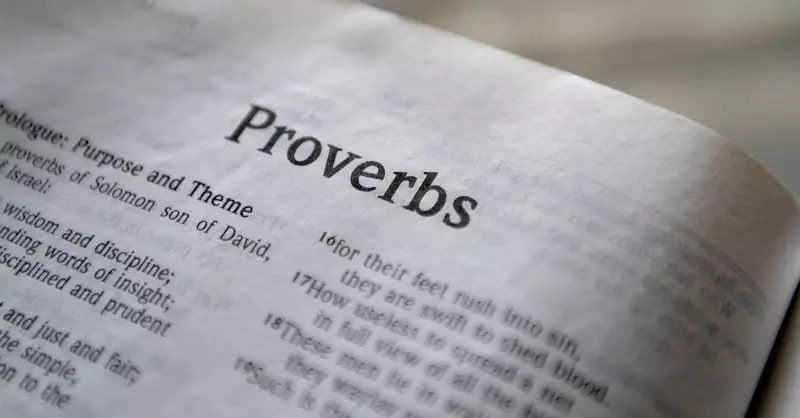
For the next two weeks, starting from today, the first readings of the liturgy of the Eucharist will focus briefly on three books taken from the body of literature called wisdom literature. We will reflect on texts from the book of Proverbs(Monday and Tuesday), the book of Ecclesiastes (Thursday to Saturday) and the book of Job which will take up the whole of next week
The Hebrew division of the Bible has three parts: the Law, the Prophets, the Writings. Within the writings are seven books which are commonly called wisdom books: Proverbs, Job, Psalms, Ecclesiastes (Qoholeth), Song of Songs, Wisdom of Solomon, Sirach (Ecclesiasticus).
Every culture has a way of recording the practical advice of previous generations and an important part of life is becoming familiar this cultural data. Wisdom Literature contains writing designed to help people live righteously, in ways that are pleasing to God. The books consist of a series of “wise sayings” emanating from the educated and leading class of the Jewish people in the period following the return from exile in Babylon.
The book of Proverbs is a collection of moral and religious instruction given to young Jews by learned teachers. The book of Proverbs contains not only proverbial sayings; that is, short popular statements expressive of practical wisdom and experience but also parables, similitudes, comparisons, and short pithy sayings. It is not merely a compilation of unrelated sayings containing the ethical wisdom of the Orientals, but constitutes the ethical code of its authors. It’s spirit is thoroughly religious and the idea of God permeates the entire book.
The book is traditionally ascribed to Solomon, the third king of Israel but this is a mere convention. It was in Solomon’s court that ancient oriental “wisdom” was first introduced to Israel, and it later became customary to attribute all books belonging to this particular literary genre to him.
Death where is thy sting? Saturday, 24th week in ordinary time – 1 Corinthians 15:35-37,42-49
Death where is thy sting? Saturday, 24th week in ordinary time – 1 Corinthians 15:35-37,42-49
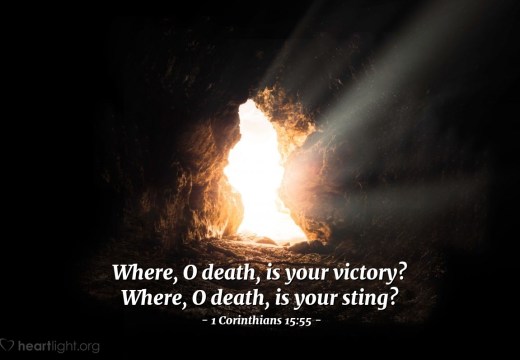
A few members in the Corinthian community who believed that they had better spiritual gifts than others were now suggesting that the Resurrection of man was absurd. Paul is clear, if Christ did not rise, our proclamation has been in vain, our faith has been in vain, our testimony that God raised Christ from the dead is false and we still continue to live in our sin (1 Corinthians 15:13-17). For Paul, death does not have the last word; if it did then his courage and the courage of every Christian would be foolish bravado.
Paul holds no punches back. He asks the community “not to be deceived”; a term he has used twice before. He exhorts the people to keep good company for “bad company ruins good morals.” (verse33). Paul is clearly telling these Corinthians that their association with the Sadducees who did not believe in the resurrection or their association with the pagans, the Greek philosophical types, who did not believe in the resurrection (Acts 17:31-32) has led them to these false conclusions about the resurrection of the dead. He appeals once again to those spreading heresy, “come to a sober and right mind and sin no more; for some people have no knowledge of God.” He says this to shame them and the doubts that they were spreading.
Paul now turns from the fact of the resurrection, which for him is a given, to explain his point in a descriptive way. Paul’s argument in this important passage is that there is both a radical difference and a real continuity between the body that dies and the body that is raised by God’s power.
Paul recalls the miracles of creation in the transformation of a bare seeds into plants (36-38). Paul says our bodies are like “seeds” which “grow” into resurrection bodies. When a plant is sown it is not sown in its final form, as a plant but as a seed. It is God who gives the seed a body as he has chosen. So, every seed is transformed into a different plant with a different body. When you plant a wheat seed, a big wheat seed does not come up. Instead, a stalk of wheat grows. So, even though our resurrection bodies come from our present bodies, we should not expect that they will be the same bodies or just “improved” bodies.So by using this analogy, one can reflect on the miracles of God’s creation and use it to understand the resurrection.
It’s hard to understand what our resurrection bodies will be like, so Paul also employs contrast to help us. He gives us four antithesis between our present body and our future resurrection body. On all counts, the resurrection body wins!
I believe in the resurrection of the body – Friday, 24th Week in ordinary time – 1 Corinthians 15:12-20

I believe in the resurrection of the body – Friday, 24th Week in ordinary time – 1 Corinthians 15:12-20
One must always be careful to separate people’s personal beliefs from that of Church teaching. Popular traditions and personal beliefs have a way of taking a life of its own; as in the case of this text and this issue. Paul is faced with a situation in Corinth that needed an immediate nipping in the bud and the matter in question concerned a central belief of the faith; the resurrection.
Clearly it was not the issue of the resurrection of the Lord Jesus that was up for public opinion; that was clearly accepted and established. One verse before our text takes off, Paul clearly states that the Corinthians did believe in the resurrection of Christ. It was not that the Corinthian Christians denied Jesus’ resurrection; there were some who denied our resurrection. They were asserting that the resurrection of Christians is an impossibility.
Who were these people? These are the “spirit filled people” whom Paul spoke of earlier in chapter 12. Somehow the chip they carried on their shoulder had now gone to their heads. These Corinthians were probably under the influence of Philonic wisdom and believed that they already possessed eternal life. So, to them, the resurrection of the body would have been meaningless because they principally attached no importance to the body.
So what could have brought about such a thought?
Corinth was home to many popular mystery religions which I have written/spoken about previously. These mystery cults claimed that their initiates had already overcome death and were living the life of the gods. While this is what we know about the mystery religions of that time, we cannot be sure to what extent these ideas influenced the Corinthians.
One body, many members – Tuesday, 24th week in ordinary time – 1 Corinthians 12:12-14,27-31a

One body, many members – Tuesday, 24th week in ordinary time – 1 Corinthians 12:12-14,27-31a
Chapters 12-14 of 1 Corinthians gives us an insight into the spiritual gifts of the community. There were some in the community who claimed to speak under the spontaneous inspiration of the Holy Spirit. These ‘prophets’ (verse 28) or ‘spiritual’ men (14:37) had provoked a sense of one-upmanship, leading to a rivalry in the community. They portrayed themselves as being better as they had the gift of tongues (also called glossolalia) and the gift of prophecy. As a consequence, some leaders lacking these gifts were being lightly esteemed.
Paul approaches this matter with concern and caution. Paul reminds the Corinthians that all ecstatic communication may not be from God. It was evident that some religious ecstasy that they were indulging in resembled the religious ecstasy of the pagans and that the mere fact of ecstatics in their worship was insufficient evidence of the presence of the Spirit of God. Therefore, it is necessary to test the spirits.
Paul also acknowledges that only some persons have the capacity to distinguish between spirits (vs. 10) and that this capacity is itself a gift inspired by the Spirit of God (vs. 4-6). Paul gives us a thumb rule when looking at the gifts given by God. There are (a) a variety of gifts (b)there is one source of these gifts and (c) their common purpose is clear, viz. the good of the entire community rather than of isolated individuals. 1 Corinthians 12:8-10 mentions these gifts as wisdom, knowledge, faith, healing, miracles, prophecy, discerning of spirits, speaking in tongues, and interpretation of tongues. Notice; while the gift of tongue were flaunted by some as a special gift, Paul not only mentions it last in this list but also mentions it last again in verses 27 and 28. There is a human tendency to be dazzled by the spectacular. The gift of miracles may far outshine in our simplistic thinking, the gift of faith. It is for this reason that Paul stresses a variety of gifts.
It is in this context that our text of today rolls in with a practical application; that of the human body. Just as a living organism depends on the proper functioning of not merely some but all of its parts, so does the Church. It cannot thrive if it only considers some members like the “prophets” and the “spiritual” men important to its well-being and the rest nonessential.
Remember that Paul is addressing their spiritual concerns (12:1) and his message is meant to be instructive. What is honoured by God and in the church seems foolish to the world, which commonly honours spectacular gifts. Every gift from God is a gift from God.
-
DO LEAVE YOUR COMMENTS
Hello!
 Fr. Warner D'Souza is a Catholic priest of the Archdiocese of Bombay. He has served in the parishes of St Michael's (Mahim), St Paul's (Dadar East), Our Lady of Mount Carmel, (Bandra), a ten year stint as priest-in-charge at St Jude Church (Malad East) and at present is the Parish Priest at St Stephen's Church (Cumballa Hill). He is also the Director of the Archdiocesan Heritage Museum and is the co-ordinator of the Committee for the Promotion and Preservation of the Artistic and Historic Patrimony of the Church.
-
Anthony Murray Thank you Padre for your clear and defined analysis on true martyrdom and how it
-
PiusThoughts 202607-18-FrWarner – Sat 18-Jul-26 (When life deals you pain..) – St. Pius X Church […] Fr Warner D’SouzaSource: PottyPadre.com […]
-
Acts of the Apostles
ActsOfTheApostles
Advent
Advent2022
ArchdiocesanHeritageMuseum
Archdiocesan Heritage Museum
Archdiocese of Bombay
ArchdioceseOfBombay
ArtAttack
BombaySeminary
catholic
cheriillustrates
Easter
Easter2023
Faith
Friday
Goanfood
GospelofLuke
Gospel of Mark
indianfood
Jesus
John's gospel
Johnthebaptist
Lent
Lent2021
Lent2023
Lent2024
Lockdowncooking
Mary
Matthew's Gospel
Monday
padrecancook
padreinthekitchen
Padrewarner
Pharisees
pottypadre
Prayer
sacredart
SacredArtInHundredWords
Saturday
Scripture
StPiusXCollege
Thursday
Tuesday
Wednesday