
THE BOMBAY SEMINARY: The Inauguration of the Parel Seminary, June 13, 1936

The storeys of the Bombay Seminary are engulfed with stories, each marked by perplexing patience, long labyrinths, bewildering events, and unending hopes. Finally, in 1936 the undeterred spirit and apostolic zeal of Archbishop Lima brought to fruition the long nourished faith of the Archdiocese.
The Archbishop called Father Conget, the new Jesuit Superior, and asked him if the Society was willing to run the Seminary. Father Conget in turn consulted his General who heartily agreed but suggested that a formal agreement be drawn between the Archdiocese and the Society.

On the other hand, the Nuns informed the Archbishop that they would be ready to vacate the Parel premises by the end of 1935. The sisters left on December 15, 1935, and handed over the keys to the Archbishop on December 31, 1935.
Next, Fr. Chrysanto Zurbitu S.J. was appointed Chaplain of the Parel Chapel on January 1, 1936. While serving as a visiting priest of King Edward Memorial Hospital, Fr Zurbitu also supervised the structural alterations as required to convert the convent and school into a seminary.
THE BOMBAY SEMINARY: From a Convent to a Seminary

In the 1930’s Parel had emerged as the main thorough fare that crossed Bombay from south to north. It was accessible by bus, tram and rail. The ‘Bishop’s Villa’ was located in a charmingly quiet environ sans congestion. Above all the Parel property belonged to the Archdiocese. With a ready – construction, spacious buildings and chapel, Parel appeared as the perfect possibility for the Bombay Seminary.
Nevertheless a problem had yet to be ironed out. Archbishop Joaquim Lima, with good grace, had to get the property back from the nuns. The sisters were not tenants. They had occupied the premises rent-free for nearly seventy years and their attachment to the property was understandable.
However, in perspective, in the 1930’s the situation of the Parel Convent was far different than the 1860’s. In seventy years the Nuns had established other schools in the city with their main residence at Byculla which also included a large boarding. Besides only a portion of the Parel grounds was utilized while a majority seemed to lie barren. Thus it was not unreasonable that Archbishop Lima felt that the Parel Institution be closed and the boarders and pupils moved to other schools conducted by the same congregation in the city.

‘Ghee-wiz’ – Discovering the surprise that clarified butter holds
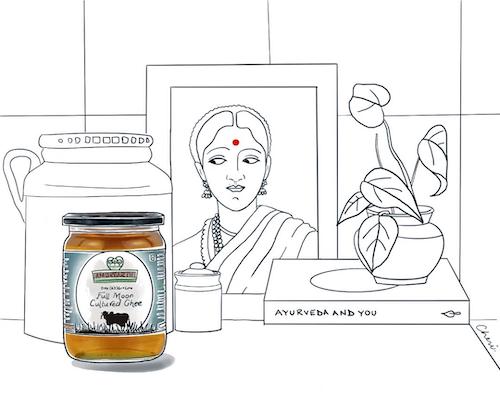
As a young girl, I wasn’t brought up eating a whole lot of hot, steaming, parathas, chapattis, dosas, or vadas for breakfast. As is the case in most Indian households even today. Being Goan, it was more like hard, and soft pao or bread, from one of the three bakeries that surrounded our home in Bandra. This bread was topped with either butter, jam, or eaten with an egg. Anything else was a treat for festivals or special occasions.
On weekends we had plenty of time to play and it was usually when mom prepped meals for the entire week. She worked long hours and would spend most of her Saturday mornings doing so after dad was back from the market. On one such Saturday, as I opened the front door to our home, all sweaty, dirty, and hungry, I was hit with what I then considered the funkiest smell on earth. The smell of butter being clarified. Mum would heat it till the water evaporated and milk solids separated, to form liquid gold otherwise known as Ghee.
Making Ghee was a process. It involved mum patiently collecting the ‘malai’ or thick cream that surfaced to the top after she boiled the milk. Every few days, I would watch her tuck away that cream into a little glass container and place it in the freezer. When she had collected enough, she would go on to make some butter, that was then clarified to make homemade ghee. It sat proudly on her kitchen counter. No refrigeration is required. Improving with age just as long as one didn’t use a wet spoon or let any moisture get into it.
Ghee has been know to be preserved in some cases for many years. Ayurveda uses ghee aged over a hundred years mixed with herbs to treat various conditions and in the past people passed it onto the next generation.
THE BOMBAY SEMINARY: Will it be Parel?

Before Parel surfaced as a viable location for the Seminary and became the subject of prolonged discussions and negotiations, other sites were considered and eventually abandoned by Archbishop Lima and his team. Some of these included St Stanislaus, Bandra; Kushroo Lodge, Mazagaon and a plot in Salsette midway between Malad and Kandivili stations atop the mining hills.
So when and how did Parel emerge as attractive possibility?
We receive a glimpse of this negotiation in August 1931. Fr Joaquim Villalonga, the Jesuit Superior attempted to persuade Archbishop Joaquim Lima to convert the two-storeyed Kushroo Lodge into the Bombay Seminary. But Archbishop Lima refused as he had his eyes fixed on Parel.
A quick throwback about the Parel property – As mentioned earlier, the Parel grounds, had been purchased by Bishop Fortini, the Vicar Apostolic of Bombay, way back in 1841. These nine acres were to serve the Bishop as a quiet country-place to withdraw from the bustling Fort and its pressurizing state of affairs. The property popularly came to be recognized as ‘The Bishop’s Villa’. Over the years, the serene villa and its surroundings, was put to several uses.

First in 1851- 1852 it housed the old Bombay Seminary amidst it’s many peregrinations. Soon the Seminary was transferred to Surat and the Bishop’s Villa came to cradle the little orphanage which later developed into St. Mary’s and St. Stanislaus’ High Schools. In 1865 the Parel property was made available to the Nuns of Jesus and Mary.
Hello!
 Fr. Warner D'Souza is a Catholic priest of the Archdiocese of Bombay. He has served in the parishes of St Michael's (Mahim), St Paul's (Dadar East), Our Lady of Mount Carmel, (Bandra), a ten year stint as priest-in-charge at St Jude Church (Malad East) and at present is the Parish Priest at St Stephen's Church (Cumballa Hill). He is also the Director of the Archdiocesan Heritage Museum and is the co-ordinator of the Committee for the Promotion and Preservation of the Artistic and Historic Patrimony of the Church.
-
Anthony Murray Thank you Padre for your clear and defined analysis on true martyrdom and how it
-
PiusThoughts 202607-18-FrWarner – Sat 18-Jul-26 (When life deals you pain..) – St. Pius X Church […] Fr Warner D’SouzaSource: PottyPadre.com […]
-
Acts of the Apostles
ActsOfTheApostles
Advent
Advent2022
ArchdiocesanHeritageMuseum
Archdiocesan Heritage Museum
Archdiocese of Bombay
ArchdioceseOfBombay
ArtAttack
BombaySeminary
catholic
cheriillustrates
Easter
Easter2023
Faith
Friday
Goanfood
GospelofLuke
Gospel of Mark
indianfood
Jesus
John's gospel
Johnthebaptist
Lent
Lent2021
Lent2023
Lent2024
Lockdowncooking
Mary
Matthew's Gospel
Monday
padrecancook
padreinthekitchen
Padrewarner
Pharisees
pottypadre
Prayer
sacredart
SacredArtInHundredWords
Saturday
Scripture
StPiusXCollege
Thursday
Tuesday
Wednesday